
Article Succession
CEO succession readiness evidence: close the gaps.
How boards identify missing evidence, design bounded development assignments and keep emergency cover separate from permanent succession.
Insights
Books, canonical references, practical guides, articles, and field notes for leaders working through succession, governance, organization design, and capability. Each begins with the work itself — helping complex questions become clearer, more defensible, and more useful in action.
Start here
Learn the language behind the work, or begin with a decision already in front of you.
Canonical reference
A working glossary of the concepts Anker Bioss uses to describe capability, complexity, judgment, roles, organizations, and change. Start here when a term is unfamiliar — or when familiar language needs greater precision.
Open the glossary
Buyer's guide
A practical guide for founders, boards, CEOs, and talent leaders weighing an advisory relationship — from the questions to ask and evidence to seek to the boundaries that protect independent judgment.
Read the buyer's guide
Frequently asked
Six reference FAQs on capability, executive assessment, CEO succession, organizational design, complexity and executive judgment, and the BIOSS tradition — concepts named clearly before the conversation starts.
Open the FAQs
Field-tested frameworks
Long-form frameworks for understanding leadership capability, organizational complexity, and the work required to connect them.
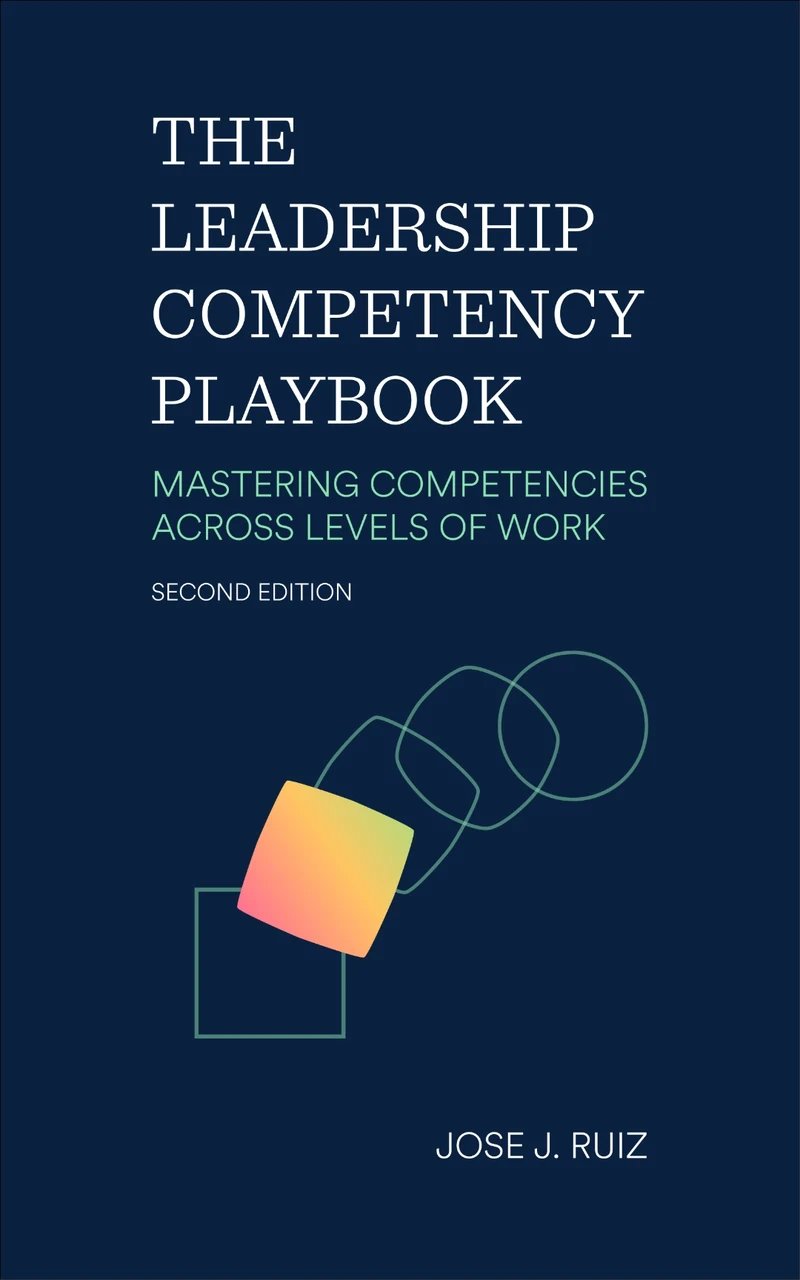
Published · Second edition · 2026
Mastering Competencies Across Levels of Work.
Now in its second edition, this is a working guide for leaders who need sharper judgment rather than another set of slogans. Jose J. Ruiz treats leadership as work that runs a continuous cycle — Design, Organize, Execute, Sustain — the DOES model that shows how strong organizations turn complexity into coherent choice, coordinated action, disciplined delivery, and long-term renewal. This edition adds a tighter architecture: the Triad of Direction, which keeps Management, Leadership, and Stewardship distinct instead of blurring them into one vague notion, and Levels of Work as the lens on every competency — the same discipline that looks procedural in one role becomes coordinating in another, architectural in another, and organization-shaping at the highest levels as time horizon, complexity, and consequence expand.
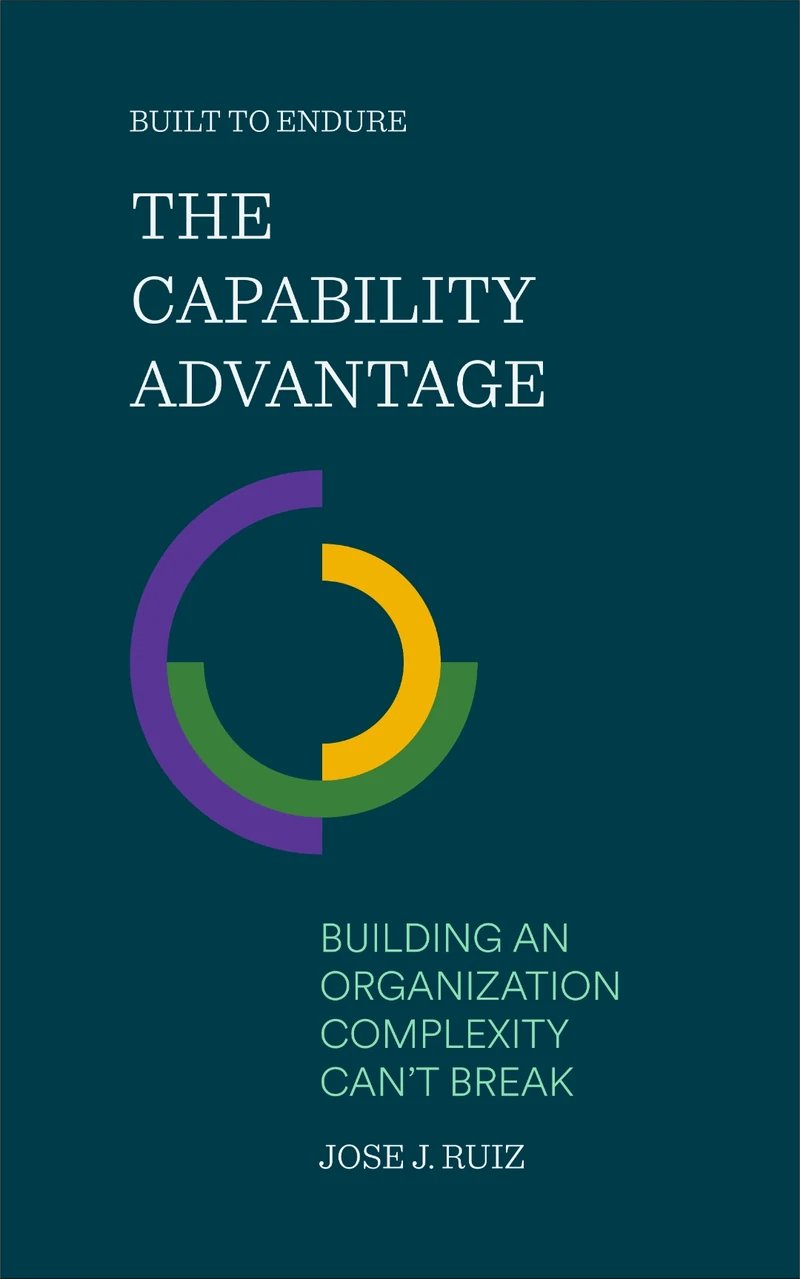
Published · Published · 2026
Building an Organization Complexity Can't Break.
In The Capability Advantage, Jose J. Ruiz shows why growth turns brittle when organizations confuse three different things: Ability (skill you can execute now), Capability (judgment that holds complexity across time), and Capacity (the scope and scale at which Ability and Capability can be applied without losing coherence). When those distinctions collapse, leaders reach for the wrong lever — training, pressure, headcount, more approvals — and the organization pays in rework, bottlenecks, and quiet exhaustion. The book reframes Organizational Capability as system-level coherence: how decision rights, structures, and culture turn diverse perspectives into a shared sense over time. You'll learn to read Flow Collapse not as a motivation problem, but as the system telling the truth — early evidence of misfit in scope, borders, time horizon, or cultural pressure.
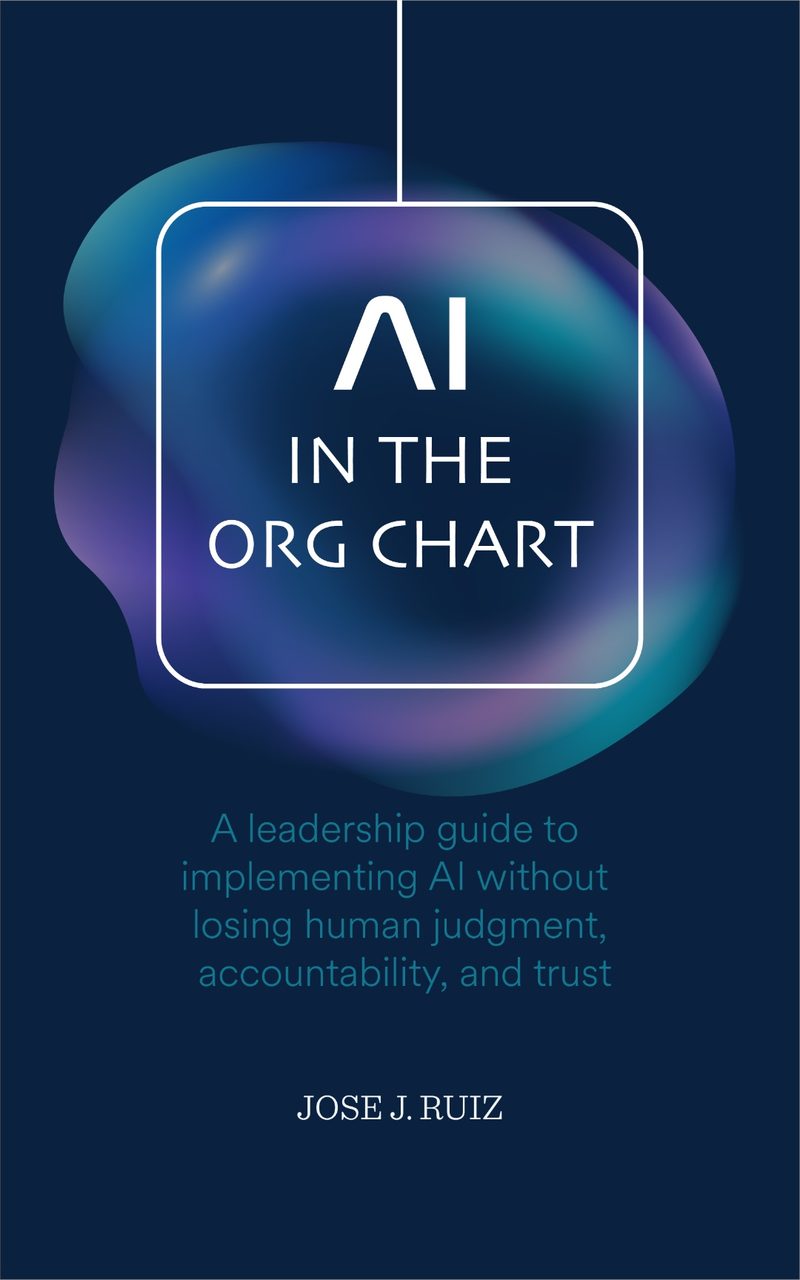
Published · Published · 2026
A leadership guide to implementing AI without losing human judgment, accountability, and trust.
AI in the Org Chart is a leadership guide for the moment when AI stops being a tool on the side of the work and starts changing who decides, who is accountable, and where trust actually lives. Jose J. Ruiz argues that AI shifts decision authority faster than formal structures adapt — a model quietly recommends, a workflow silently approves, an agent acts before anyone signed — and the org chart on the wall stops describing the real distribution of judgment. The book gives leaders a way to see the shift as it happens: where human judgment still has to hold, where it can be augmented, where it is being displaced by default rather than by design, and what has to be redrawn — roles, decision rights, review gates, escalation paths — so that accountability keeps up with the work AI is now doing. Written for CEOs, boards, and senior operators navigating AI adoption without giving up the discipline of a well-governed organization.
Long-form
Developed arguments about leadership, capability, organizations, and consequential decisions — written to examine a question in depth and arrive at a defensible point of view.
How boards identify missing evidence, design bounded development assignments and keep emergency cover separate from permanent succession.
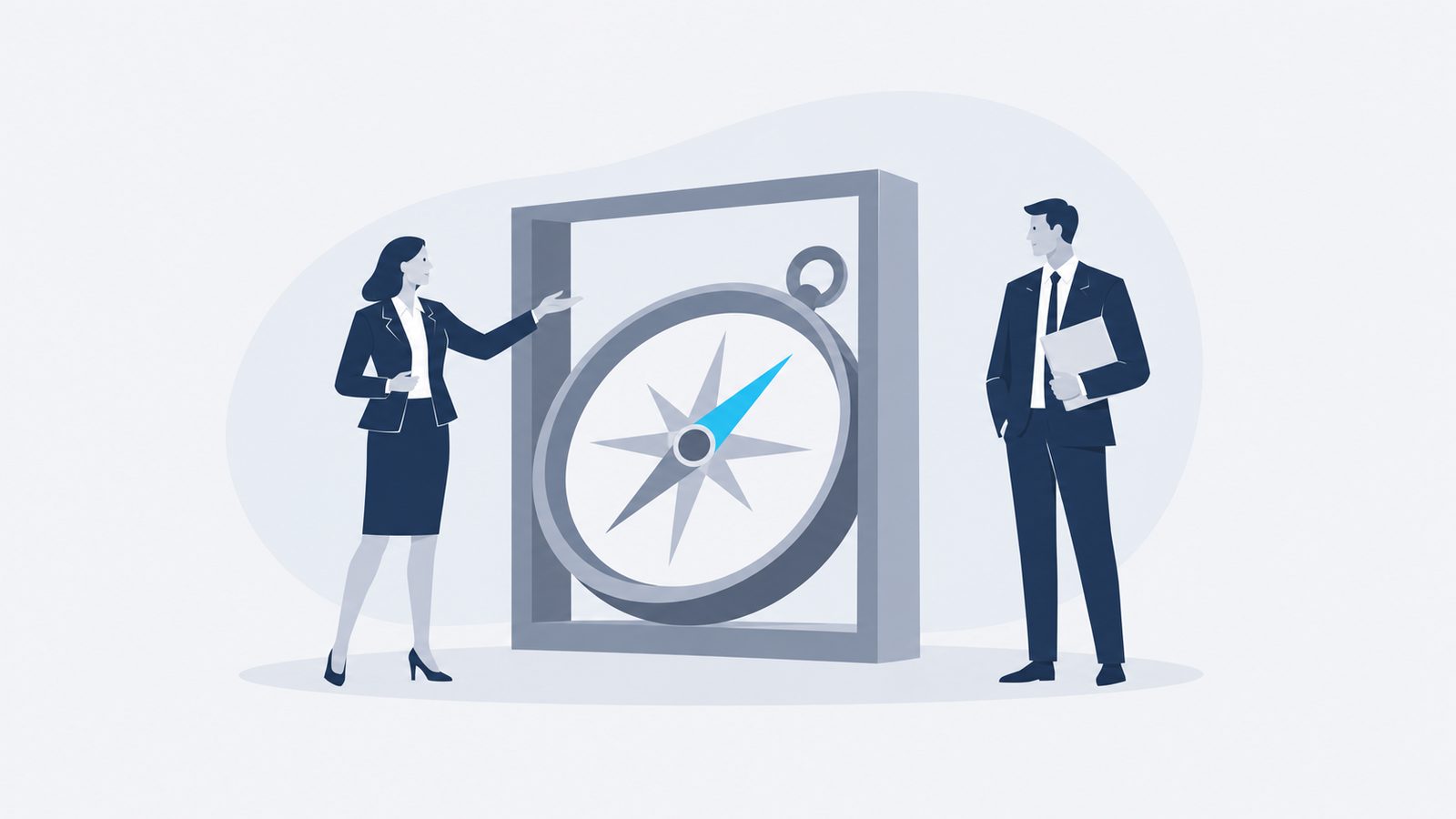
Purpose, success and guardrails give the board a common basis for decisions before a strategy is approved.

Why a family business succession plan has to separate three handovers (ownership, governance, and management), the patterns that stall plans built around a single name, how to read a successor's readiness, and the order in which to build the plan.
From the practice
Anonymized executive learning briefs from real engagements — how the work was defined, what the appreciation surfaced, and what the client now operates deliberately.

A board evaluation at a family-controlled industrial manufacturer revealed a high-performing board supervising a plan whose assumptions the world had already moved past — and traced the gap to a mandate that had never been put on the table.

More than twenty HR executives and managers across five countries trained to deploy the Levels of Work methodology inside the group's own talent system — work described before the person is judged, and talent reviews that run on a common language across every business.

Core criteria for family board members designed before any evaluation, individual assessments of third-generation members across capability, ability, and capacity, and seat assignment on evidence — with ongoing evaluations and personal development plans that turn a succession dispute into a development system.
Field notes
Short observations from live work: a distinction worth making, a pattern worth noticing, or a question that changes how a decision is framed.

Jobs-to-be-done → key questions → evidence-based answers → storyline. The throughline that turns insight into decision.

Leaders over-control, over-escalate or improvise when the moment turns. Decision quality degrades exactly when it is needed most.

Most competency models are a category error. Here is what the underlying architecture actually looks like.
Firm news
Office activity, speaking engagements, publications and firm-level moves.
Jose Ruiz will attend the Farnborough International Airshow, 20–24 July 2026, in Hampshire, United Kingdom — meeting with aerospace and defence leaders on capability, organization, and people.
July 2026